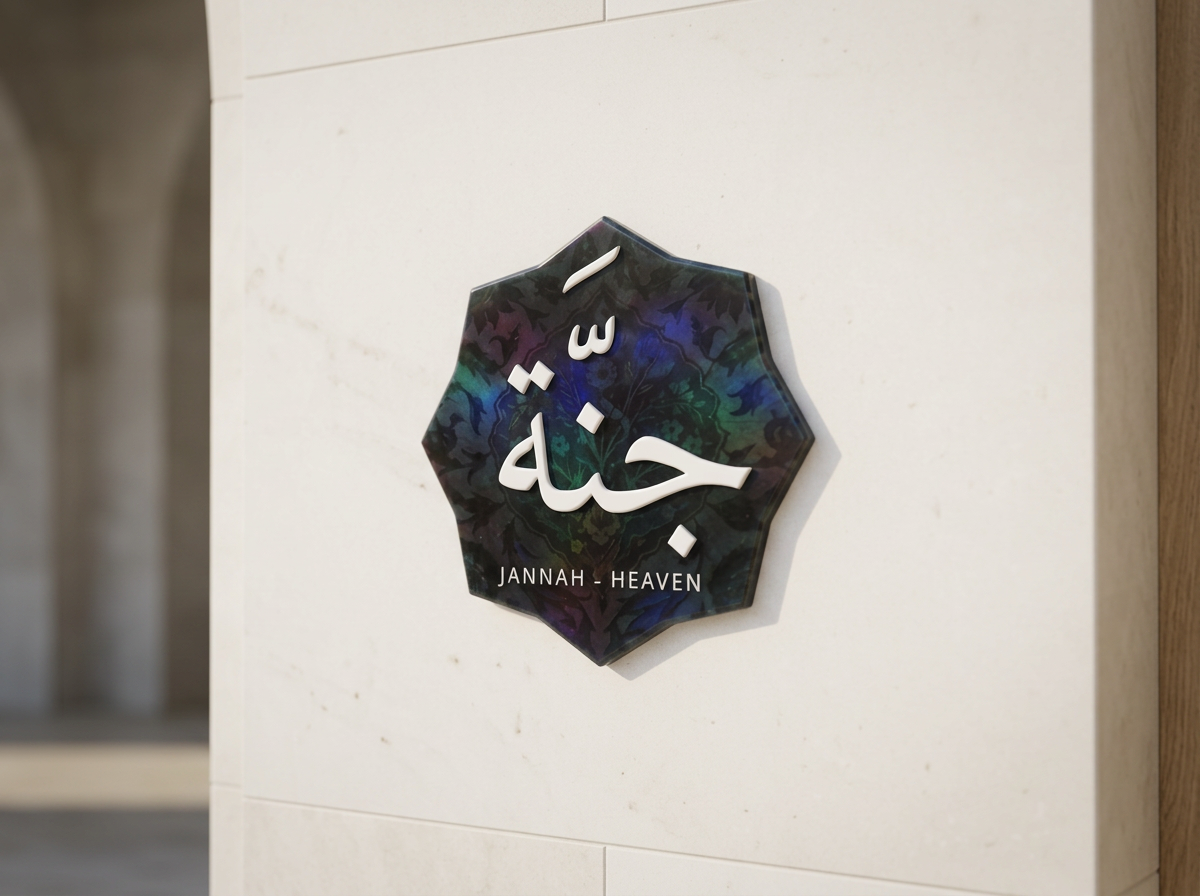
The Arabic word جنّة (Jannah), meaning "Garden" or "Paradise" — it's also translated as "Heaven."
A bit of background on the Jannah:
Root meaning: Jannah comes from the Arabic root ج-ن-ن (j-n-n), related to concealment or covering — the same root gives words like majnoon ( hidden/insane) and janin (embryo, hien in the womb). The garden sense comes from how dense foliage conceals the ground beneath it.
In Islamic theology: Jannah is the ultimate reward for the righteous in the afterlife, described in the Quran in vivid, sensory terms — gardens beneath which rivers flow, shade, fruit, peace, and the pleasure of God's presence. It's often contrasted with Jahannam (Hell).
Multiple levels: Islamic tradition describes Jannah as having different levels or gardens (sometimes numbered at eight), with the highest being Firdaws (Paradise), reserved for the most devoted.
Visual style of the tile: The intricate floral tilework framing this text is a classic Persian/Islamic decorative style — repeating floral medallions are common in mosque and shrine architecture, often symbolizing the abundance and beauty associated with Paradise itself, so the artwork and the word are thematically tied together.

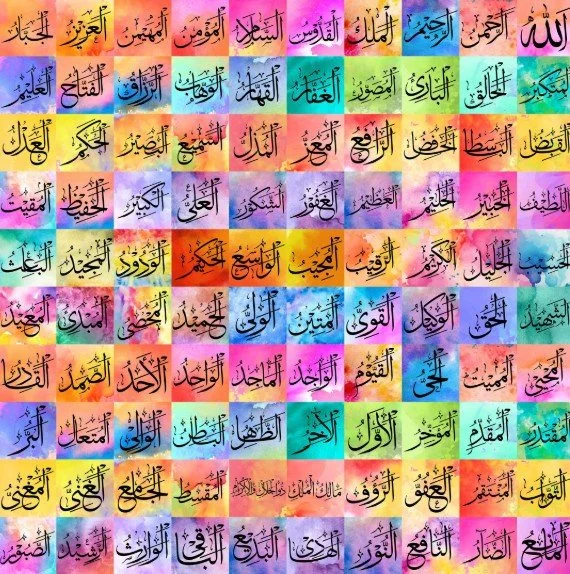
God has the following 8 qualities according to the Quran :
merciful (Ar-Rahman)
regal (Al-Malik)
provider (Ar-Razzaq)
creator (Al-Khaliq)
shaper/craftsmen (Al-Musawwir)
generous giver (Al-Wahhab)
imparter of Blessings (Al-Mannan)
a guide (Al-Hadi)
arkān al-Islām أركان الإسلام
5 Pillars of Islam :
Salah and Dua- formal and informal prayer
Hajj- pilgrimmage to Mecca
Zakat- giving
Shahada
Sawm = fasting usually at Ramadan
7 Articles of faith - faith / belief in all of the following:
Allah (God)
Angels
Quran and Holy Scriptures
Day of judgment - last day
Destiny
Eternal Life after Death